Winter School for Pedagogical Coordinators
Experiences and dialogued reflections
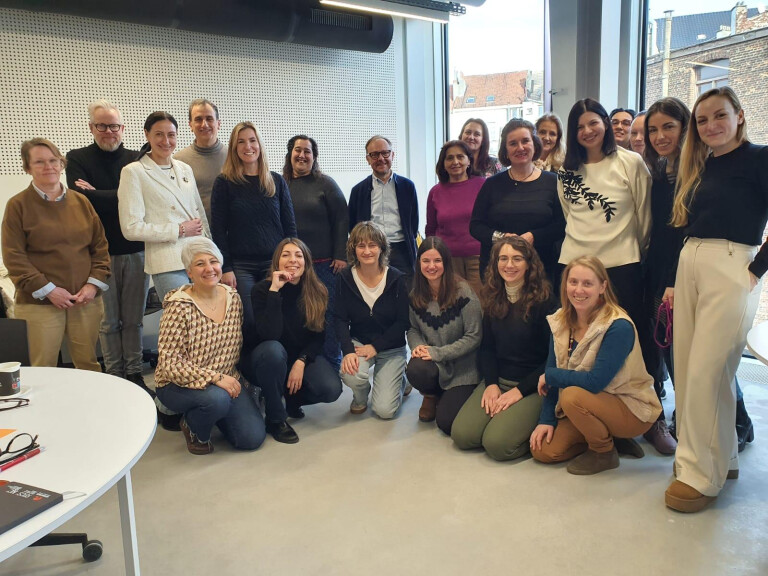
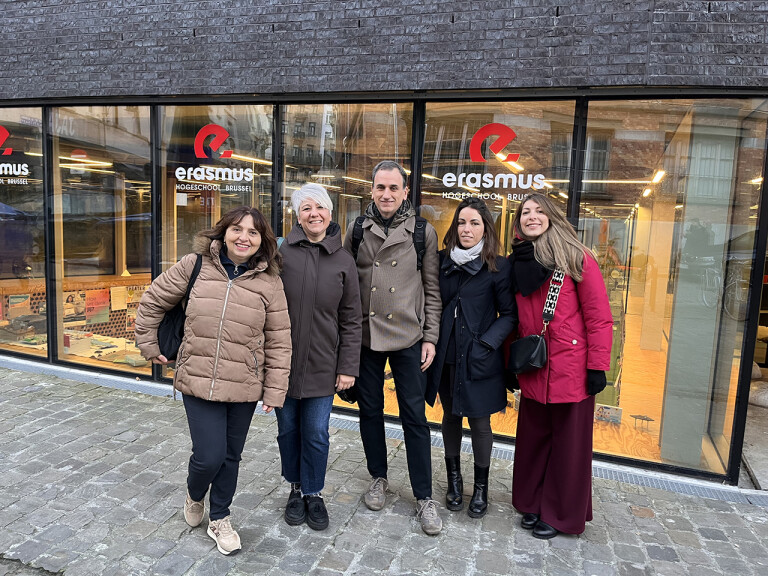
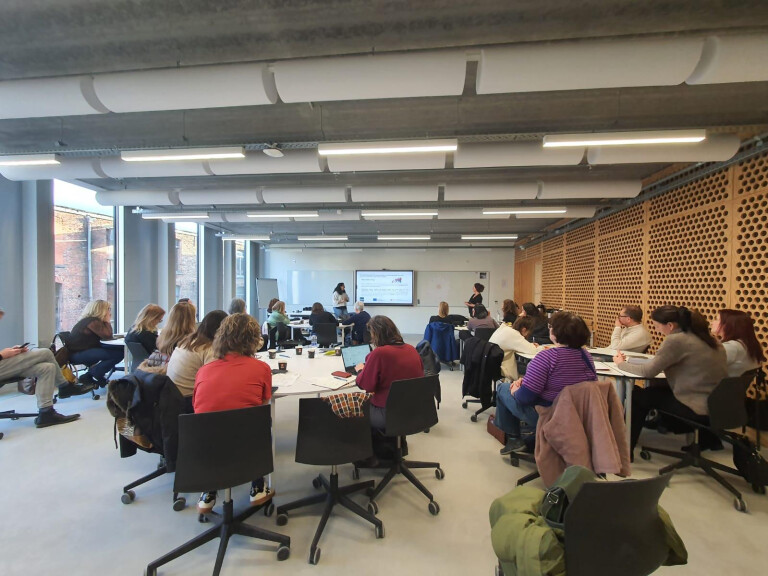
Two pedagogists from the City of Bologna took part in an intense mobility experience in Brussels, inserting themselves in a “future-oriented” educational context. The path was characterized by a constant comparison with other educational realities involved (Belgium, Sweden, Spain, Latvia and Italy) and by a methodology of working in mixed groups, encouraging an exchange of good practices and the sharing of innovative educational solutions between educators, teachers and school leaders of different nationalities on various topics.
Diversity, Inclusion and Social Justice
The visit to the Brussels Migration Museum offered a deep immersion in the themes of super-diversity and cultural roots, analyzed through the lens of the socio-political history of migratory flows. The experience highlighted the unique identity of Brussels — today the second most cosmopolitan city in the world — underlining how understanding migration dynamics is a fundamental prerequisite for promoting real social justice within educational services.
Relationship and Support for Families
The reflection on the centrality of the relationship with families was guided by the principles of the UN Convention on the Rights of the Child (1989).
The ability to promote the active participation of girls, boys and families, breaking down linguistic and cultural barriers and relational asymmetries, must be considered an essential professional competence.
The experience was enriched by a visit to the Huis van het Kind in Anderlecht, a center for families that represents a strategic territorial resource for parenting support and access to services, confirming the importance of integrating the school into a larger community welfare system.
STEAM
The STEAM (Science, Technology, Engineering, Arts, Mathematics) approach has been explored through excellent laboratory settings, where art acts as a mediator to stimulate scientific curiosity and critical thinking.
The main stages have highlighted innovative pedagogical models:
- Wonderlab (Hogeschool Brussels)
- MUMABOT Project
- BRoll (Brussels Open Living Lab)
These experiences underline how the integration between expressive languages and technologies can undermine traditional educational models, promoting flexible, inclusive learning that is deeply connected to urban and social reality.
Internationalization
The international dimension has been analyzed as a structural and decisive element of the school system. Although it may sometimes appear 'invisible', it operates on multiple organizational levels to transform the entity's identity:
- Learning culture: internationalization translates into the creation of a continuous learning environment, capable of opening up to global practices and welcoming innovation as a daily working method.
- Vision and Governance: the success of this process depends on a shared vision of objectives and strategies, supported by the willingness of managers and coordinators to enhance transnational collaborations.
- Reflective capacity: openness to Europe becomes a tool for self-evaluation, allowing the school to reflect on its strengths and areas for improvement through constant comparison with other educational systems.
Sustainability
Promoting sustainability in the educational field means, first of all, creating a horizontal relationship between teachers, girls and boys: a creative dialogue where everyone can make a difference. It is not enough to know, we must act with respect for nature and for others. Educating girls and boys in an interdisciplinary way allows them to understand how the environment, economy and society are linked together. This commitment is enshrined in the 2030 Agenda (Goal 4): in fact, Article 4.7 establishes that, within the decade, every student must have the tools to build a fairer world that respects the planet.